Écoutez gratuitement ce podcast dans l'application :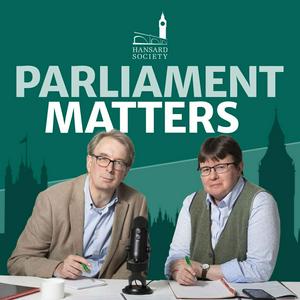 Télécharger gratuitement dans l'App Store
radio.fr
Minuteur
Sauvegarde des favoris
Épisodes disponibles
5 sur 121
- Where are the Reform UK peers?There have been three significant developments at Westminster this week: a Commons vote that the Liberal Democrats are presenting as a major breakthrough, a peerages list that raises questions of political balance, and renewed concerns about the limited powers Parliament holds to scrutinise international treaties.We begin with the Ten Minute Rule Bill proposed by Liberal Democrat MP Dr Al Pinkerton, intended to create a duty on the Government to negotiate entry to the EU Customs Union. The motion succeeded only on a tied vote, resolved by Deputy Speaker Caroline Nokes using her casting vote. This was not a vote on the Bill’s text, nor does it compel Government action: it simply grants leave for the Bill to be introduced and placed in the Private Members’ Bill queue, where its prospects are uncertain.We then turn to the latest appointments to the House of Lords. Labour gains the largest share, and the Liberal Democrats secure five new peers, while Reform UK receives none—an outcome that is increasingly difficult to justify given Reform’s parliamentary and local government presence and their sustained lead in the opinion polls. We also consider the implications of the anticipated hereditary peer departures on Lords committee work and scrutiny.We also preview the upcoming Lord Speaker contest between Lord Forsyth and Baroness Bull. Ruth chaired the official hustings earlier this week, so she discusses the issues and questions that were raised. We talk to Lord Goldsmith, Chair of the International Agreements Committee, about treaty scrutiny. Lord Goldsmith argues that the current 21-day scrutiny period under the Constitutional Reform and Governance Act is inadequate and overly dependent on Government control of parliamentary time. When in opposition Labour spokespersons agreed, but now they are in Government Ministers think the system is satisfactory.Finally, the programme closes with an update on the Assisted Dying Bill’s slow progress in the Lords and the potential reputational consequences if proceedings continue to stall.____ 🎓 Learn more using our resources for the issues mentioned in this episode. ❓ Send us your questions about Parliament: ✅ Subscribe to our newsletter. 📱 Follow us across social media @HansardSociety / @hansardsociety.bsky.social £ - Support the Hansard Society and this podcast by making a donation today. Parliament Matters is a Hansard Society production supported by the Joseph Rowntree Charitable Trust. Presenters: Mark D’Arcy and Ruth FoxProducer: Richard Townsend Hosted on Acast. See acast.com/privacy for more information.--------1:00:15
- 2024: The year our party system finally broke?This week we focus on the Hansard Society’s new book, Britain Votes 2024, which brings together a powerhouse team of leading political scientists - including Professors Sir John Curtice, Phil Cowley and Tim Bale - and many other distinguished experts to dissect every facet of a record-breaking general election. The 2024 contest delivered the largest post-war swing, a Labour landslide, and the Conservatives’ lowest-ever parliamentary representation. This volume, a special edition of our Parliamentary Affairs journal, explains how and why such a dramatic turnaround came about. We talk to the editors Alistair Clark, Louise Thompson and Stuart Wilks-Hee to unpack how Labour won a landslide on just a third of the vote, why the 2024 contest shattered so many electoral records, and what this says about the resilience – or fragility – of UK democracy. We explore the extraordinary disproportionality of the result, the historically low turnout, and the sense of voters “fishing around” for alternatives in a system under strain.Britain Votes 2024: The 2024 UK General Election is available now from all good bookshops and online retailers. Podcast listeners can get 30% off via the Oxford University Press website using the discount code: AUFLY30This week we also discuss another turbulent week in Westminster, from the Budget fallout and the sudden resignation of OBR chair Richard Hughes to the unusual constitutional power Parliament holds over his post via the Treasury Committee. We explore the politics of abstention versus rebellion inside a government with a huge majority, and what to expect as the Finance Bill and a separate National Insurance Contributions (Employer Pension Contributions) Bill reach Parliament before Christmas.We also examine the afterlives of ex-MPs: Lloyd Russell-Moyle’s move from Labour to the Greens, the flow of former Conservatives into Reform, and what these shifts say about deeper tensions on the right. Plus, we dig into a row over local democracy as the government delays new mayoral elections in parts of Sussex, Essex, Norfolk, Suffolk and Hampshire, prompting cross-party accusations that Labour is “cancelling democracy” and confusion about whether other local contests will still go ahead.____ 🎓 Learn more using our resources for the issues mentioned in this episode. ❓ Send us your questions about Parliament: ✅ Subscribe to our newsletter. 📱 Follow us across social media @HansardSociety / @hansardsociety.bsky.social £ - Support the Hansard Society and this podcast by making a donation today. Parliament Matters is a Hansard Society production supported by the Joseph Rowntree Charitable Trust. Presenters: Mark D’Arcy and Ruth FoxProducer: Richard Townsend Hosted on Acast. See acast.com/privacy for more information.--------1:05:25
- 101 resolutions and a Finance Bill. How the Budget becomes lawIt’s Budget week, so we look at what happens after the Chancellor sits down and how the days announcements are converted into the Finance Bill. We speak to Lord Ricketts, Chair of the European Affairs Committee, about whether Parliament is prepared to scrutinise the “dynamic alignment” with EU laws that may emerge from the Government’s reset with Brussels. And we explore the latest twists in the assisted dying bill story, where a marathon battle is looming in the New Year after the Government allocated 10 additional Friday sittings for its scrutiny.___Please help us improve Parliament Matters by completing our Listener Survey. It will only take a few minutes.Go to: https://podcastsurvey.typeform.com/to/QxigqshS___In this episode, we unpick a Budget Day thrown off course by an early OBR leak that overshadowed Rachel Reeves’ statement, gave Kemi Badenoch an unexpected advantage, and left MPs scrolling their phones rather than watching the chamber. But once the drama fades, the hard legislative work begins. MPs must first approve 101 Ways and Means resolutions before the Finance Bill can be presented. We explain the crucial 30-sitting-day deadline for getting the Finance Bill through Second Reading, and we demystify why, in Westminster-speak, scheduling that debate for “tomorrow” almost never means it will take place the next day.We then turn to the new House of Lords report looking at the reset of the UK–EU relationship. Lord Ricketts, Chair of the European Affairs Committee, joins us to explain how “dynamic alignment” on food standards, carbon pricing, youth mobility and even defence loans could pull the UK closer to EU rules. He warns that Parliament – especially the Commons – has neither a plan nor the structures, expertise or capacity to keep track of the steady stream of technical agreements likely to emerge, raising familiar questions about whether “taking back control” has empowered ministers far more than parliamentarians. We also discuss what happens when a Lords committee cannot reach a consensus on a report, and whether such divisions may become more common in an age of polarisation.Finally, the Government Chief Whip has announced a further 10 ten Friday sittings for consideration of the assisted dying bill in the New Year. We look at what this reveals about government neutrality, the prospects for filibustering, and when this parliamentary Session is really likely to end. We also look at the proposed new Lords inquiries on national resilience, domestic abuse, vaccination and numeracy, and examine the justice reforms floated in Sir Brian Leveson’s review, including the contentious suggestion that the right to a jury trial could be abolished in some cases.___🎓 Learn more using our resources for the issues mentioned in this episode. ❓ Send us your questions about Parliament: ✅ Subscribe to our newsletter. 📱 Follow us across social media @HansardSociety / @hansardsociety.bsky.social £ - Support the Hansard Society and this podcast by making a donation today. Parliament Matters is a Hansard Society production supported by the Joseph Rowntree Charitable Trust. Presenters: Mark D’Arcy and Ruth FoxProducer: Richard Townsend Hosted on Acast. See acast.com/privacy for more information.--------1:06:06
- Is the House of Lords going slow on the assisted dying bill?In this episode we look at the latest Covid Inquiry report addressing the lack of parliamentary scrutiny during the pandemic and the need for a better system for emergency law-making. With the Budget approaching, we explore how the Commons Speaker, Sir Lindsay Hoyle MP, might discipline ministers who announce policies outside Parliament and why a little-known motion could restrict debate on the Finance Bill. Sir David Beamish assesses whether the flood of amendments to the assisted dying bill risks a filibuster and raises constitutional questions. Finally, we hear from Marsha de Cordova MP and Sandro Gozi MEP on their work to reset UK–EU relations through the Parliamentary Partnership Assembly.___Please help us improve Parliament Matters by completing our Listener Survey. It will only take a few minutes.Go to: https://podcastsurvey.typeform.com/to/QxigqshS___As the Covid Inquiry highlights how little parliamentary scrutiny many pandemic restrictions received, we look at the problems in the UK’s emergency law-making process and urge parliamentarians to develop a better system for the next crisis.With the Budget looming, we explore how the Commons Speaker, Sir Lindsay Hoyle MP, could discipline ministers who announce major policies outside Parliament (for example, changes to income tax…). We explain why an obscure technical motion might limit debate on the Finance Bill – the legislation that will implement Rachel Reeves’ tax plans – and why leading figures in the Government should steer well clear of using it.The assisted dying bill is inching through its House of Lords committee stage. Our Lords procedural guru Sir David Beamish joins us to consider whether the huge volume of amendments proposed by Peers could threaten the bill’s progress. When does rigorous scrutiny become filibustering? And would it be unconstitutional for their Lordships to block the Bill?Finally, we meet Marsha de Cordova MP and Sandro Gozi MEP, the parliamentarians quietly working to de-frost the UK–EU relationship through the Parliamentary Partnership Assembly which monitors and reports on our Trade and Cooperation Agreement with Brussels.🎓 Learn more using our resources for the issues mentioned in this episode. ❓ Send us your questions about Parliament: ✅ Subscribe to our newsletter. 📱 Follow us across social media @HansardSociety / @hansardsociety.bsky.social £ - Support the Hansard Society and this podcast by making a donation today. Parliament Matters is a Hansard Society production supported by the Joseph Rowntree Charitable Trust. Presenters: Mark D’Arcy and Ruth FoxProducer: Richard TownsendThis episode contains Parliamentary information licensed under the Open Parliament Licence v3.0 Hosted on Acast. See acast.com/privacy for more information.--------1:07:03
- The assisted dying bill: A conversation with its sponsor, Lord Falconer of ThorotonIn this episode, we are joined by Lord Falconer, the Labour Peer steering the Terminally Ill Adults (End of Life) Bill through the House of Lords. Although he has attempted to legislate for assisted dying several times before, this is the first occasion he is working with a bill that has already cleared the House of Commons. In a wide-ranging conversation, he explains why this issue has driven him for more than a decade and assesses the Bill’s prospects of becoming law.___Please help us improve Parliament Matters by completing our Listener Survey. It will only take a few minutes.Go to: https://podcastsurvey.typeform.com/to/QxigqshS___Lord Falconer sets out why he believes the current legal framework for assisted dying is “unfit for purpose” and argues that while the Lords should scrutinise the Bill thoroughly, it should not overturn a measure endorsed by elected MPs. He warns against attempts to filibuster the legislation and against adding so many safeguards that the system becomes impossible for terminally ill people to use.The discussion tackles several of the Bill’s most contested provisions: the role of Coroners and Medical Examiners in reviewing assisted deaths; how mental capacity should be assessed; who should approve the drugs used in assisted dying; and whether an appeal process is needed for applicants who are refused. We also explore the number of delegated powers in the Bill, how an assisted dying service might operate in practice, and how it would be funded.Lord Falconer also reflects on the parliamentary timetable. He is confident there is enough time for the Lords to complete their scrutiny and for legislative “ping-pong” between the Commons and the Lords to reconcile any changes to the text – and he predicts that most Peers will resist any attempt to stop the Bill through deliberate time-wasting. Hosted on Acast. See acast.com/privacy for more information.--------47:24
Plus de podcasts Gouvernement
 Pensez stratégiqueGouvernement
 L’économie de demain est l’affaire de tous, avec Patrick ArtusBusiness, Gouvernement, Actualités, Actualité économique, Investissement
 5-4Gouvernement, Actualités, Actualité : analyses
 QUARTIER LIBREGouvernement
 RTL archives secrètes, François MitterrandGouvernement, Histoire
 Sources diplomatiquesÉducation, Gouvernement, Histoire, Actualités, Culture et société, Documentaire, Politique
 DGSI : Parole déclassifiéeGouvernement
 Horizons MarinesGouvernement
 The InterviewGouvernement, Actualités, Politique
 Carte d'identités : Israéliens
Podcasts tendance de Gouvernement
 الحل إيه؟ مع د. رباب المهديGouvernement, Actualités, Politique
 L'accès à la citoyenneté françaiseGouvernement
 Les voix de la PPGouvernement
 Les voix de l'enfance protégéeGouvernement
 The Find Out PodcastGouvernement, Actualités, Actualité : analyses, Politique
 Law and ChaosGouvernement, Actualités, Politique
 Pascal BonifaceGouvernement, Actualités, Politique
 Question TimeGouvernement, Actualités
 Europolis: The Global Europe Podcast by ECDPMGouvernement, Actualités, Technologies, Politique
 La Ingobernable. Un podcast sobre Marca EspañaGouvernement
 Sig det' løgnGouvernement, Actualités, Politique
 The National Security PodcastÉducation, Gouvernement, Actualités, Actualité : analyses, Politique
 Civics 101Gouvernement, Histoire, Culture et société
 Pitchfork Economics with Nick HanauerBusiness, Gouvernement, Actualités, Politique
 سقراط مع عمر الجريسيGouvernement
- 5-4Gouvernement, Actualités, Actualité : analyses
 The Truth of the MatterBusiness, Gouvernement, À but non lucratif
- L’économie de demain est l’affaire de tous, avec Patrick ArtusBusiness, Gouvernement, Actualités, Actualité économique, Investissement
 Employment and Social Development CanadaBusiness, Gouvernement, Culture et société, Carrière, Documentaire
 BorgenUdenFilterGouvernement
 Les Clés de la Ville, le podcast de l'AIMFGouvernement
 The Trade GuysBusiness, Gouvernement, À but non lucratif
 Ukraine par Jacques BaudGouvernement, Culture et société, Documentaire
 FiascoGouvernement, Histoire, Actualités, Politique
 DialogueGouvernement, Actualités, Culture et société
 The DSR NetworkGouvernement
 Optimist EconomyGouvernement, Culture et société
 Profil Public le PodcastBusiness, Gouvernement, Carrière
 DGT podcast: Languages and TechnologyÉducation, Gouvernement
- DGSI : Parole déclassifiéeGouvernement
À propos de Parliament Matters
Join two of the UK's leading parliamentary experts, Mark D'Arcy and Ruth Fox, as they guide you through the often mysterious ways our politicians do business and explore the running controversies about the way Parliament works. Each week they will analyse how laws are made and ministers held accountable by the people we send to Westminster. They will be debating the topical issues of the day, looking back at key historical events and discussing the latest research on democracy and Parliament. Why? Because whether it's the taxes you pay, or the laws you've got to obey... Parliament matters!Mark D'Arcy was the BBC's parliamentary correspondent for two decades. Ruth Fox is the Director of the parliamentary think-tank the Hansard Society.❓ Submit your questions on all things Parliament to Mark and Ruth via our website here: hansardsociety.org.uk/pm#qs📱 Follow us across social media @HansardSociety and...✅ Subscribe to our newsletter for all the latest updates related to the Parliament Matters podcast and the wider work of the Hansard Society: hansardsociety.org.uk/nl.Parliament Matters is a Hansard Society production supported by the Joseph Rowntree Charitable Trust • Founding producer Luke Boga Mitchell; episode producer Richard Townsend. Hosted on Acast. See acast.com/privacy for more information.
Site web du podcastÉcoutez Parliament Matters, Pensez stratégique ou d'autres podcasts du monde entier - avec l'app de radio.fr
Obtenez l’app radio.fr gratuite
- Ajout de radios et podcasts en favoris
- Diffusion via Wi-Fi ou Bluetooth
- Carplay & Android Auto compatibles
- Et encore plus de fonctionnalités
Obtenez l’app radio.fr gratuite
- Ajout de radios et podcasts en favoris
- Diffusion via Wi-Fi ou Bluetooth
- Carplay & Android Auto compatibles
- Et encore plus de fonctionnalités

Parliament Matters
Scannez le code,
Téléchargez l’app,
Écoutez.
Téléchargez l’app,
Écoutez.
 France